






How thermal bridging and PSI calculations support as-built efficiency
Did you know that thermal bridging can account for up to 30% of a building’s total heat loss?


Even if your building has been designed with strong insulation, poorly performing junctions can allow significant amounts of heat to escape. This might mean that your building appears compliant during design modelling, but struggles to deliver the same level of efficiency once it’s constructed – which can be almost impossible to determine without proper assessment.
This is why PSI value and thermal bridging calculations are so valuable. They analyse how heat moves through junctions, which allows you to identify hidden performance risks and refine the construction details early on in the project. In today’s blog, we share everything you need to know about these critical energy calculations, so you can ensure your building performs exactly as expected.
What are thermal bridges in building construction?
Thermal bridges are areas where heat escapes more easily through the building envelope. They typically occur where insulation is interrupted or weakened, particularly at junctions where different building elements meet. Common examples include:
- Wall-to-floor junctions
- Wall-to-roof connections
- Window and door openings
- Structural penetrations i.e. balconies
The implications of this can be significant, with even small junctions contributing to a substantial proportion of the building’s total heat loss – potentially leading to:
- Increased heat loss
- Higher energy use once the building is operational
- Difficulty achieving predicted SAP or SBEM ratings
- A larger gap between the building’s design predictions and real-world performance
The importance of PSI values in thermal bridge calculations
It can be tempting to rely on the standard or default thermal bridging values published in industry guidance (such as Accredited Construction Details), as this can save you both time and money when it comes to early-stage calculations. But these default values are unlikely to reflect the exact construction details of your project, meaning you’re more likely to:
- Overestimate heat loss in energy models
- Miss key opportunities to optimise junction performance
- Create unexpected performance gaps once construction is complete
PSI values in thermal bridging measure exactly how much heat is lost through a linear junction in the building fabric, allowing your project team to understand the true thermal performance of these junctions. Instead of relying on assumptions, the exact junction can be modelled to reflect the actual construction detail being used, which allows you to:
- Improve the accuracy of your energy modelling
- Strengthen the thermal performance of the building fabric
- Increase confidence that the building will perform as expected once completed
Why thermal bridges can lead to condensation problems
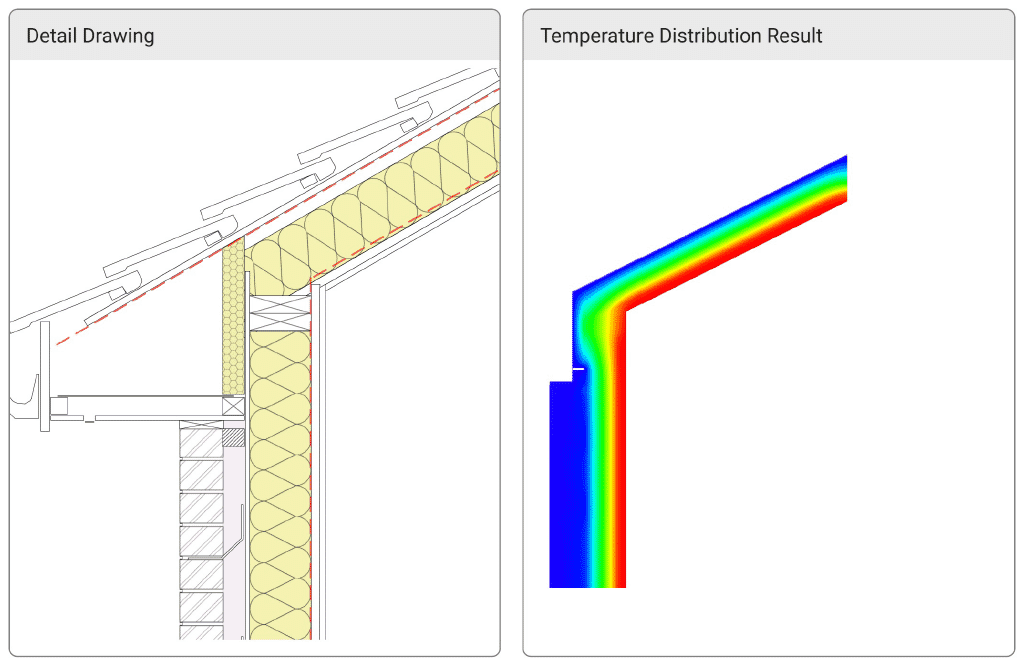
Thermal bridges don’t just affect your building’s energy efficiency. They can also create colder internal surfaces at junctions, allowing moisture to form when temperatures drop below the dew point. Over time, this can lead to a range of issues, including:
- Surface condensation
- Mould growth
- Damage to finishes and materials
- Reduced indoor air quality
Detailed thermal bridge analysis enables you to identify these risks early on in the design process. By modelling how specific junctions perform, you can see where surface temperatures may fall below acceptable levels and then adjust the design accordingly before construction begins. This will help to reduce condensation risks, protect the building fabric, and create healthier indoor environments for occupants.
Improve your building’s energy performance with Encon Associates
Thermal bridges may appear to be small details within a building’s construction, but their impact on energy efficiency and durability cannot be ignored. At Encon Associates, we offer comprehensive thermal bridging and PSI calculations as part of a wider suite of building physics and energy assessment services to help you deliver projects that perform efficiently and have better long-term outcomes for both building owners and occupants.
Our experienced team of building performance specialists will carry out project-specific calculations that reflect the actual construction details used on your development, enabling you to better understand how your building’s junctions will influence its overall thermal performance. We’ll present you with 2D and 3D thermal modelling reports in accordance with BR 497 and ISO 10211:2017 methodologies, supported by clear recommendations on how to achieve acceptable temperature factors and minimise your building’s condensation risk.
Want to maximise your building’s energy performance? Contact us today to arrange your PSI value and thermal bridge calculation.
Call: 01159 875 599 or email:












Can’t be faulted on promptness and professionalism. Thank you, Encon Associates
