







Our guide to the Future Homes Standard 2027
According to the UK Green Building Council, the built environment is responsible for around 25% of the UK’s total greenhouse gas emissions. Reducing those emissions, therefore, is central to the government achieving its target of net zero carbon emissions by 2050.

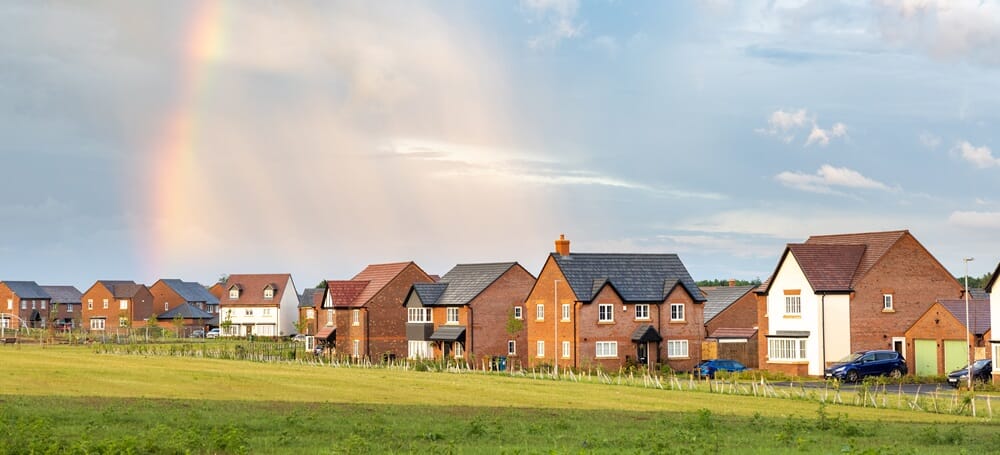
Published in 2021, the government’s Heat and Buildings Strategy set out how the UK would decarbonise heating and improve energy efficiency across homes and buildings – and the Future Homes Standard (FHS) is a key mechanism to deliver this for new builds. The Standard was formally confirmed on 24th March 2026, with the new regulations coming into force from 24th March 2027 for standard developments.
Here’s what the Future Homes Standard means for your project, and what you need to do to prepare.
Will the Future Homes Standard affect your project?
Whether or not the Future Homes Standard impacts your project all comes down to when you subject your building control application.
Here are the key dates to be aware of:
For standard buildings
- If you submit your application before 24th March 2027, you can still build to the current Approved Document L standard, as long as construction begins before 24th March 2028.
- If you submit your application on or after 24th March 2027, then your project must comply with the Future Homes Standard in full.
For higher-risk buildings
- If you get your application in before 24th September 2027, you can still build to Approved Document L, provided construction gets underway before 24th March 2028.
- If you miss that deadline and submit your application on or after 24th September 2027, your project must comply with the Future Homes Standard in full.

How the Future Homes Standard has evolved from 2023 to today
The government guidance on how compliance will be measured has changed since the Future Homes Standard was first proposed.
Here’s what’s changed and why:
- December 2023: the government proposed that the Home Energy Model (HEM) would eventually replace SAP calculations. This is intended to give a more detailed software model of a home’s real-world energy use and carbon emissions.
- March 2026: the government confirmed that HEM’s launch would be delayed, giving them more time to ensure that the model is as robust as possible when it does go live.
- 24th March 2027: the Standard will be launched with Standard Assessment Procedure (SAP) 10.3 as the initial approved compliance route under Approved Document L 2026.
- From June 2027: the HEM is expected to launch, at least three months after the Standard comes into force.
The targets set out in the Future Homes Standard haven’t changed, though. New homes will still need to produce at least 75% less carbon dioxide than under current Building Regulations, and they won’t be able to connect to the gas network from March 2027. This can be achieved through:
- Better fabric efficiency and airtightness, plus overheating mitigation
- Low carbon heating (e.g. heat pumps) and solar PV
- An EV charging point (or the wiring for one)
- Efficient ventilation, such as MVHR

How to prepare for the Future Homes Standard 2027
Step 1: Confirm which compliance route your project falls under
- Check your building control application date against the 24th March 2027 cut-off point (or 24th September 2027 if you’re constructing a higher-risk building). This will help you confirm whether your project can still follow the current rules, or if it needs to meet the FHS.
- If you’ve already submitted your building control application, confirm whether construction can realistically start before 24th March 2028. If it can’t, you’ll need to comply with the FHS.
Step 2: If your project falls under the Standard, you’ll need to:
- Bring in an energy assessor to model your scheme using the relevant tool (SAP 10.3 for now, or HEM once it’s released). They’ll be able to flag where your design falls short and recommend any changes you need to make to comply with the relevant methodology.
- Review your heating strategy. If your project is specifying a gas boiler, you’ll need to move to a pump-led approach. Heat pumps can impact plant space, hot water storage, and electrical capacity, so it’s vital that this decision is made during the design stage.
- Lock in fabric, airtightness, and ventilation specifications at RIBA Stage 2 or 3. These figures will feed directly into your carbon emissions calculation, so it’s important to do this sooner rather than later.
- Brief your architect and M&E engineer early so that your whole design team is working to the same compliance route from the beginning. This will avoid the scenario of different consultants designing to different assumptions.
Encon Associates can help you comply with the Future Homes Standard
As one of the UK’s leading sustainable buildings consultancies, Encon Associates has been tracking the Future Homes Standard through every development from 2023 to now. When the Standard does come into force, we’ll be here to support you every step of the way – from reviewing your energy strategy to modelling your scheme under the relevant tool.
If you have any questions about how to comply with the Future Homes Standard, get in touch with our expert team today.
Call: 01159 875 599 or email:




Great service from the Encon Associates team. They were professional, quick and reliable in all dealings with us, from the initial enquiry to completion. Highly recommended.
